
Chiller Room Tank Removal and Unknown Chemical Disposal: A Real Industrial Job in California

When a California manufacturing facility needed tanks removed from a chiller room, the biggest challenge was not the physical removal — it was not knowing exactly what was inside them. That is where Invert Construction Corp comes in. Before a single tank was moved, our team tested the contents, identified what we were working with, and built a safe, compliant disposal plan around those results. Here is exactly how that job worked from start to finish.
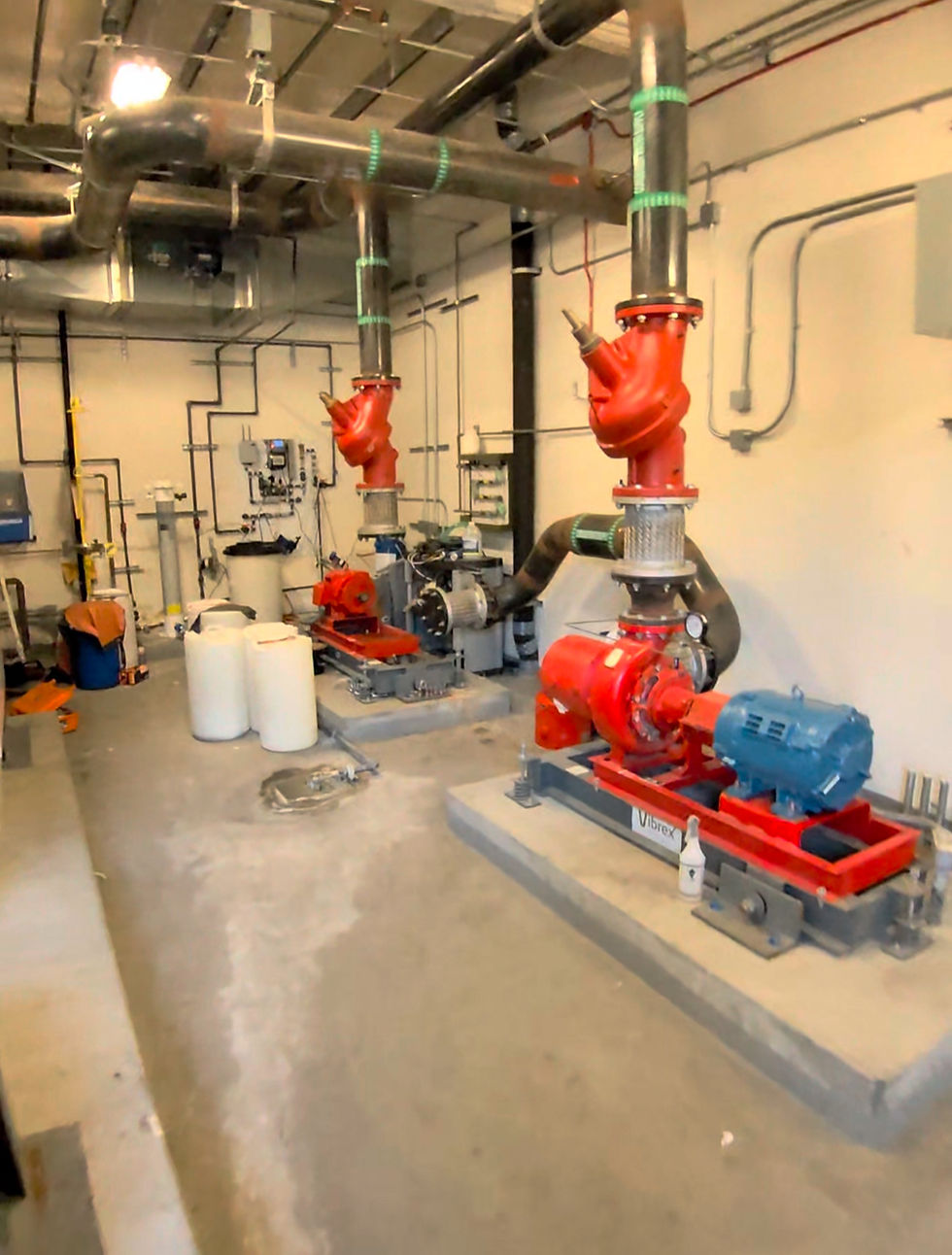
Why Does pH Testing Matter Before Removing Industrial Tanks?
Industrial chiller rooms can contain a wide range of chemicals depending on the facility and the age of the equipment — glycols, coolants, refrigerants, corrosive solutions, or chemical mixtures that have never been properly documented. When a tank's contents are unknown, moving or pumping it without testing first is not just risky — it can be illegal.
pH testing is one of the first steps our team takes when arriving at a job involving unknown liquids. Here is why it matters:
· pH determines whether a liquid is corrosive- one of the four primary hazardous waste characteristics under RCRA and California DTSC regulations
· A pH below 2 or above 12.5 classifies a waste as corrosive hazardous waste, which changes how it must be handled, packaged, and disposed of
· Knowing the pH before pumping protects our crew from chemical exposure and prevents equipment damage
· It determines what type of drum and containment is appropriate for transport
· It is required information for completing accurate hazardous waste manifests
Testing upfront also protects the client. A facility that cannot document what is in its tanks and how it was disposed of is exposed to serious regulatory liability under California DTSC and EPA requirements. Our testing and documentation closes that gap.
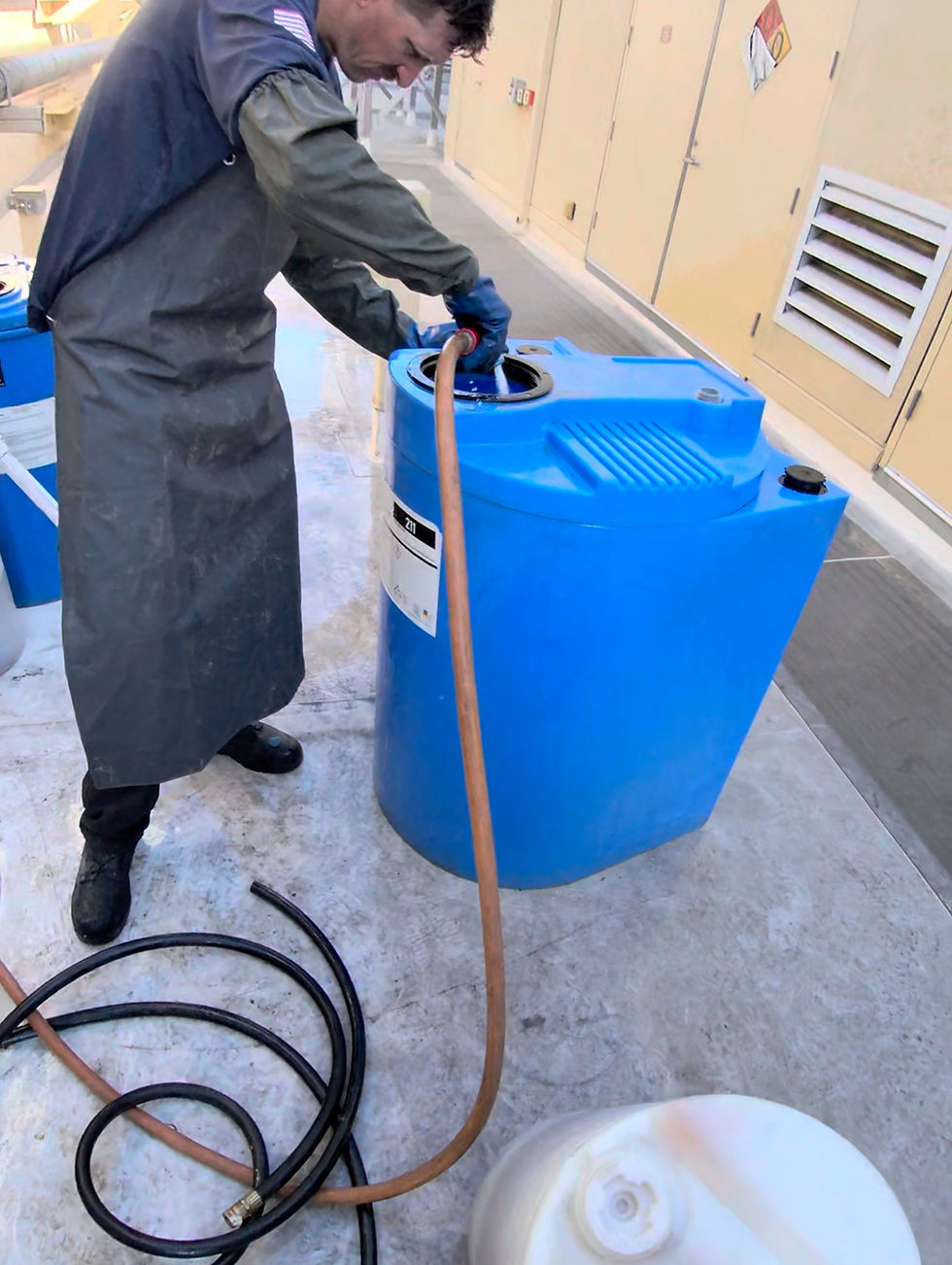
How Did the Chiller Room Tank Removal Job Work?
When our team arrived at the California manufacturing facility, the chiller room contained tanks with contents that had not been fully documented. Before any pumping or removal began, our technicians conducted pH testing and a full chemical assessment to understand exactly what we were working with.
Once the contents were identified and classified, we built the disposal plan around those results. Here is how the job progressed:
· pH testing and chemical assessment completed on all tank contents before any work began
· Waste classification determined based on test results - corrosive, hazardous, or non-hazardous
· Tank contents pumped out using appropriate equipment for the chemical type identified
· Liquids transferred into properly rated 15-gallon drums - drum type selected based on chemical classification and compatibility
· Drums labeled, sealed, and staged for transport in compliance with California hazardous waste regulations
· Hazardous waste manifests completed for every regulated waste stream
· Drums transported by registered hazardous waste transporter to a licensed disposal facility
· Full documentation package - manifests, test results, and disposal certificates -provided to the client at job closeout
The physical tank removal followed once the contents were fully cleared. The entire process was documented from the moment our team arrived to the moment the last drum left the facility.

Why Is Unknown Chemical Waste One of the Most Important Jobs to Get Right?
Unknown chemical waste is one of the highest-risk situations in industrial hazardous waste removal. When a facility does not know what is in a tank, the temptation is sometimes to assume it is not a big deal and move forward without proper testing. That assumption creates serious problems.
Mixing incompatible chemicals during pumping or disposal can cause dangerous reactions. Transporting an improperly classified waste stream with the wrong manifest is a federal violation. Disposing of a corrosive or toxic waste without proper documentation exposes the facility to DTSC enforcement, EPA penalties, and potential remediation liability.
The right approach - which is exactly what Invert Construction Corp follows- is to test first, classify accurately, and build every step of the job around those results. It takes more time upfront but it eliminates the risks that come back to cost facilities far more down the line.
[ INSERT PHOTO
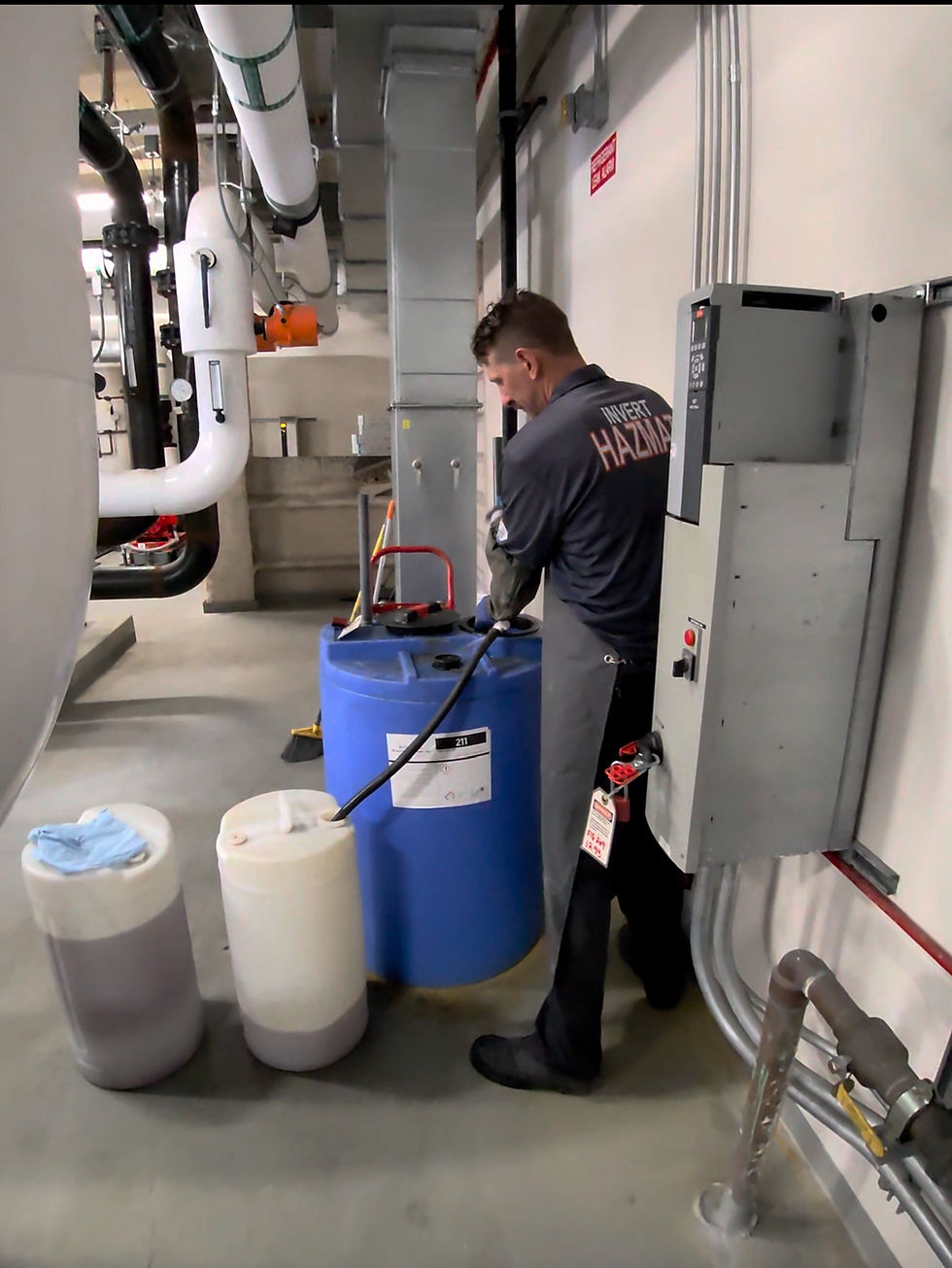
What Types of Industrial Facilities Need This Service?
Chiller room tank removal and unknown chemical disposal is a service we handle across a wide range of California industrial and manufacturing facilities, including:
· Food and beverage manufacturing facilities with glycol-based cooling systems
· Pharmaceutical and biotech facilities with process cooling chemicals
· Metal fabrication and machining operations with coolant and cutting fluid waste
· Commercial and industrial properties being decommissioned or renovated
· Facilities that have inherited old equipment and have no documentation of tank contents
· Property managers dealing with tanks left behind by previous tenants or operators
In every case the starting point is the same — our team tests, identifies, and classifies before anything is moved. That process protects our crew, protects the client, and ensures every waste stream is handled in full compliance with California DTSC and federal EPA requirements.
Frequently Asked Questions
What does pH testing tell you about industrial tank contents?
pH testing tells us whether a liquid is acidic, neutral, or alkaline - and how extreme that reading is. Under California DTSC and federal RCRA regulations, liquids with a pH below 2 or above 12.5 are classified as corrosive hazardous waste. That classification determines how the material must be handled, what type of containment is required, and how it must be manifested and disposed of. It is one of the most critical first steps in any unknown chemical removal job.
Can industrial facilities pump out their own tanks without a hazardous waste company?
It depends on what is in the tanks. If the contents are confirmed non-hazardous, some facilities manage their own pumping. But if the contents are unknown, potentially corrosive, or likely to be classified as hazardous waste under California or federal regulations, a licensed hazardous waste company must be involved in the removal, manifesting, and disposal process. Attempting to move or dispose of unknown chemicals without proper testing and documentation creates significant regulatory and safety risk.
Why are 15-gallon drums used for this type of disposal?
Drum selection depends on the type and volume of chemical waste being transported. 15-gallon drums are commonly used for smaller volume liquid waste streams because they are manageable in weight when full and are available in chemical-compatible materials for different waste types. The drum material - steel, poly, or other lining - is selected based on the chemical classification identified during testing to ensure safe containment during transport.
What documentation does our facility receive after the job?
You receive a complete documentation package including the results of any on-site testing conducted, hazardous waste manifests for every regulated waste stream, transport records showing chain of custody from your facility to the disposal site, and certificates of disposal from the licensed treatment or disposal facility. California DTSC requires facilities to retain hazardous waste records for a minimum of three years.
Do you handle emergency chiller room or industrial tank removal in California?
Yes. Invert Construction Corp offers 24/7 emergency response for industrial hazardous waste situations across California and the United States. If you have an urgent tank removal or unknown chemical situation, contact us directly and we will mobilize as quickly as possible.
Need Industrial Tank Removal or Unknown Chemical Disposal in California?
Invert Construction Corp is a hazmat-certified, family-owned hazardous waste removal company serving manufacturing and industrial facilities across California and the United States. We test, classify, pump, manifest, transport, and dispose of industrial chemical waste properly — so your facility stays compliant and protected.


Comments